This is not a theme that I set out to develop, but instead it evolved out of a series of projects over the last twenty years. I read the book twice, once because I wanted to and once for research purposes. It was a great read; Mitchell didn't win a Pulitzer Prize in 1936 for nothing. And despite the flaws in Mitchell's interpretation of the antebellum South, the book came much closer to the truth than did Hollywood's film adaptation three years later. I still have not figured out why people obsess on it the way they do; but obsess they do, therefore all the GWTW projects here.
 1701 Peachtree Street |
.jpg) Crescent Apartments |
 Russell Apartments |

Della Manta Apartments |

Fitzgerald House |
|
Efforts to prevent demolition of the Crescent Apartments, where Margaret Mitchell lived between 1925 and 1932 and where she wrote the bulk of Gone With the Wind, began in earnest in 1986, the fiftieth anniversary of the novel's publication. In 1989 the building was designated a City of Atlanta Landmark Building under the city's new historic-district zoning ordinance.
That same year, 1989, Betty Talmadge, widow of Senator Herman Talmadge of Georgia and a trustee of the Georgia Trust, engaged my services to restore part of the Tara film set for display at the Atlanta History Center's exhibition on the fiftieth anniversary of David O. Selznick's blockbuster movie, which premiered in Atlanta in December 1939. Later I sorted, tagged, and inventoried jumble of elements from the movie set, which remained in storage at Lovejoy Plantation.
During the course of the restoration of the Crescent Apartments in the 1990s, I developed a historical context for the building and recreated the historic interiors of Apartment #1, working with Mary Rose Taylor, executive director of Margaret Mitchell House, Inc., and with the project architects Surber-Barber to ensure accuracy in restoration of the floor plan and finishes. The museum was opened to the public in May 1997.
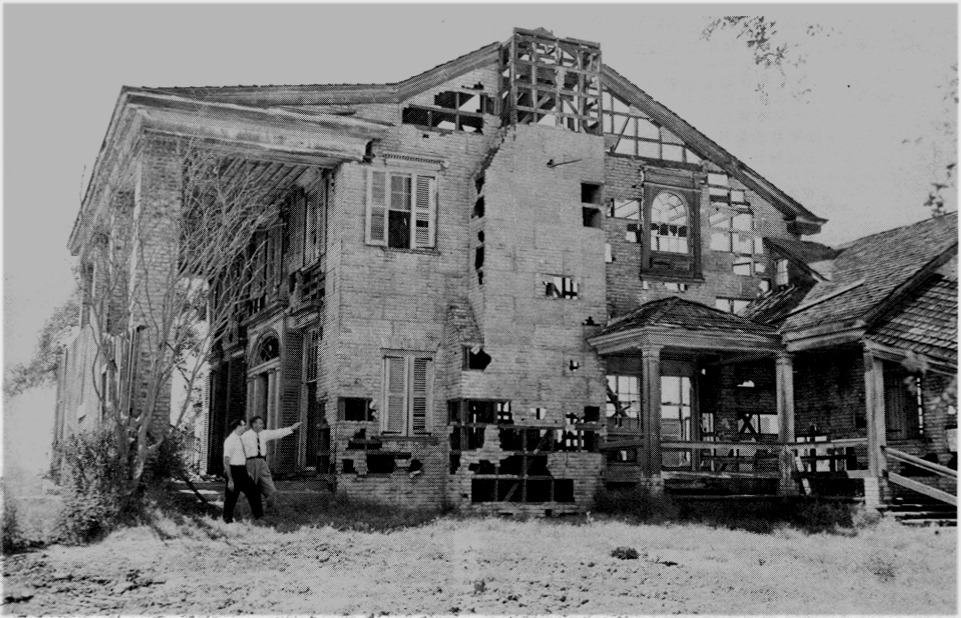
Mrs. Talmadge's home near Lovejoy, the Crawford-Talmdage House, was thought by some to have been a part of Mitchell's inspiration for Twelve Oaks: After her divorce from Senator Talmadge, Mrs. Talmadge established an Old-South-themed catering and event facility there at what she called Lovejoy Plantation. She had acquired the Tara set in 1979 with the vague idea of using it as some sort of prop for her catered events and, for similar reasons, in 1980 also acquired the antebellum home of Margaret Mitchell's great-grandparents, the Fitzgeralds. Mitchell's memories of that house and the tales of the Civil War that she heard from her aging relatives while visiting as a child in the early 1900s were at the core of the fictional Tara she wrote about as an adult. And so the antebellum portion of the old Fitzgerald house wound up on a temporary foundation in a field across the road from Mrs. Talmadge's own house at Lovejoy.
In 1998, the author documented the architectural history of the Fitzgerald House for the Margaret Mitchell House, but it remained, unrestored, at Lovejoy Plantation when Mrs. Talmdage died in May 2005. Two months later, the house was torn down after it was damaged when knocked from its foundation by a tornado. Only the mantles and some of the woodwork, flooring, and framing lumber from the historic structure were saved.
Margaret Mitchell hated the publicity and lack of privacy that came with her fame as an author. She never wrote another novel and spent much of her energy in later years defending the integrity of her work. Frustrated by the legions of tourists who searched in vain for Tara, her brother, Stephens Mitchell, had their parents' 1912 house at 1701 Peachtree Street demolished when he moved out in 1952, reportedly because he and his sister had decided that they didn't want tourists "tramping through it." Only shutters and a few other architectural elements from the house were salvaged and preserved at the Atlanta History Center.
In 1932, Margaret Mitchell and John Marsh moved from the Crescent Apartments to the Russell Apartments on Seventeenth Street, just around the corner from her parents' house on Peachtree Street. In 1939, they moved again, to Apartment #3 at the Della-Manta Apartments at 1268 Piedmont Avenue, where she spent the last ten years of her life. After her death in 1949, the original manuscript of Gone With the Wind is thought to have been burned in the furnace in the basement of this building. The Russell was demolished in the 1980s, but the Della-Manta remains intact.
Stephens Mitchell was tenacious in protecting his sister's legacy and successfully fought any attempt to capitalize on that legacy, including the abortive plans in 1959 to recreate Tara as a tourist attraction in Clayton County. He died in 1967, but the family's continued protective stance nearly derailed creation of the Margaret Mitchell House Museum in the 1990s. Indeed, some thought the fires that almost destroyed the Crescent Apartments on two occasions were set by Margaret's irate ghost. Ghost or coincidence, the effect has been the same: little remains of the structures most associated with Margaret Mitchell and Gone With the Wind, which is probably a good thing.
